



Buscador global


Mostrando del 621 al 630 de 1234 resultados para: La guerra de Nuestros Abuelos filtrando por: Situación de aprendizaje
Aurkezpena: Higidura Ikertzen
Gida honetan, Hezkuntza Baliabide Ireki (HBI) honen ezaugarriei eta erabilerari buruzko orientazio orokorrak daude, erabilitako metodologia-estrategiak eta ebaluazioa. Baina, bere egitura berezia dela-eta, aparteko fitxa didaktiko bat eskaintzen da erronka bakoitzerako. Fitxetan orientabide zehatzak ematen dira, eta hauek zehazten: edukiak, landutako konpetentziak eta ebaluazio-proposamena.
Sistema materialak
Sekuentzia didaktikoak askotariko arazo-egoerak biltzen ditu, erronka txiki gisa aurkeztuta, zenbait saiotan lantzeko. Erronka bakoitza ekoizpen bati zuzendutako ikerketa-jarduera gidatu batzuen bidez ebazten da.
Materiaren Propietateak ikertzen
Sekuentzia didaktikoak askotariko arazo-egoerak biltzen ditu, erronka txiki gisa aurkeztuta, zenbait saiotan lantzeko. Erronka bakoitza ekoizpen bati zuzendutako ikerketa-jarduera gidatu batzuen bidez ebazten da.
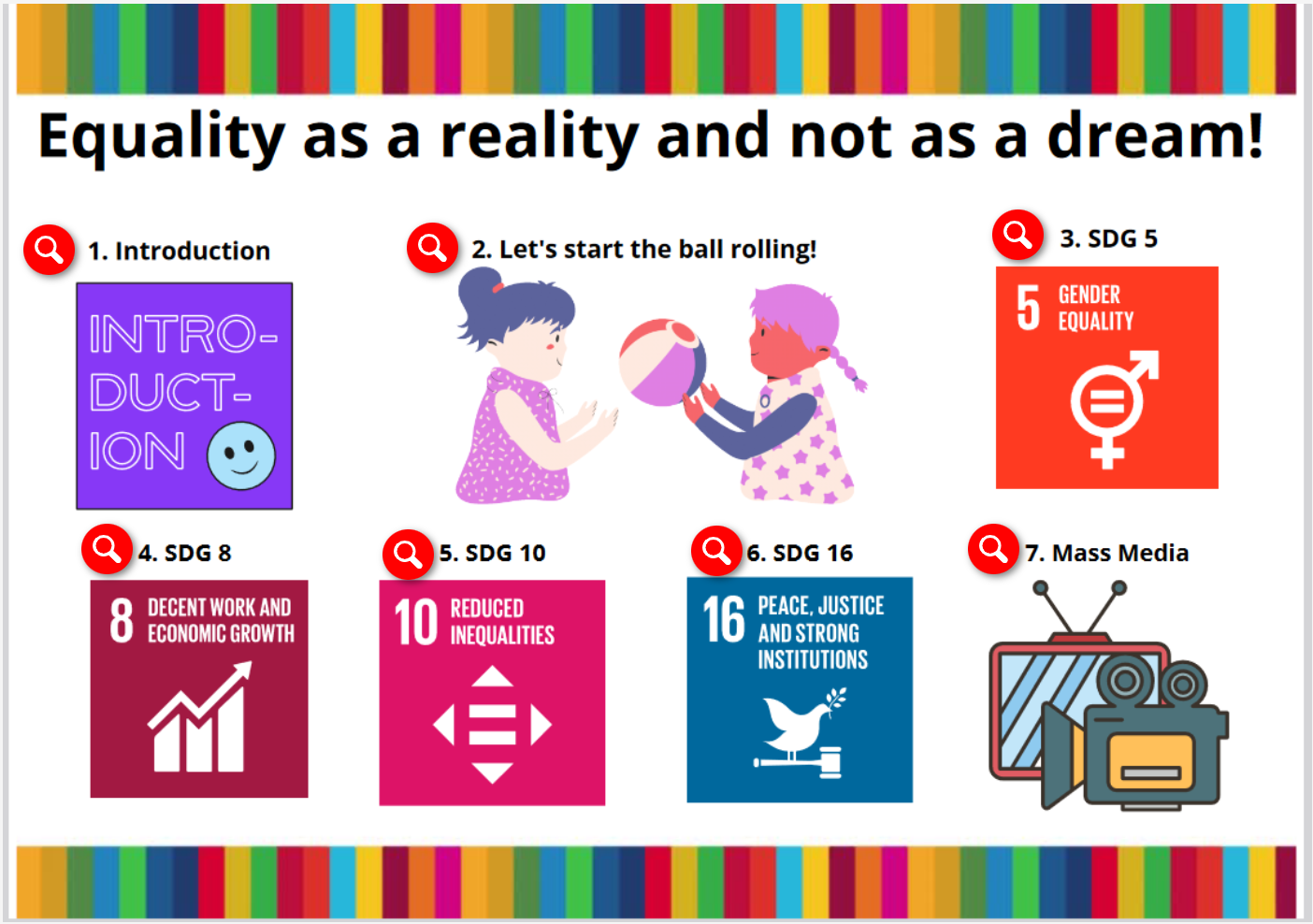
Equality as a reality and not as a dream!
This OER will improve both English skills and ICT ones by using as a context the Agenda 2030: SDG 5, 8, 10 & 16. Students will develop the key competences and the specific competences. They will have learnt:
- To develop research skills and visual design skills.
- To express general truth, future events, hypothetical situations and regrets and planned actions, arrangements, predictions and spontaneity.
- To debate
- To skim and scan and reading awareness
- Vocabulary related to the semantic field of gender equality, work and economic growth, reduced inequalities, peace, justice and strong institution
- Create an infographic, do a job interview, do a timeline, and write news reports
- Review questions words
- Give right intonation in questions: up and down
- Future tenses: will / be+ going to / present continuous.
- Conditionals: 1st / 2nd / 3rd type.
- Vocabulary related to mass media, gender equality, decent work and economic growth, reduced inequalities, peace, justice and strong institutions.
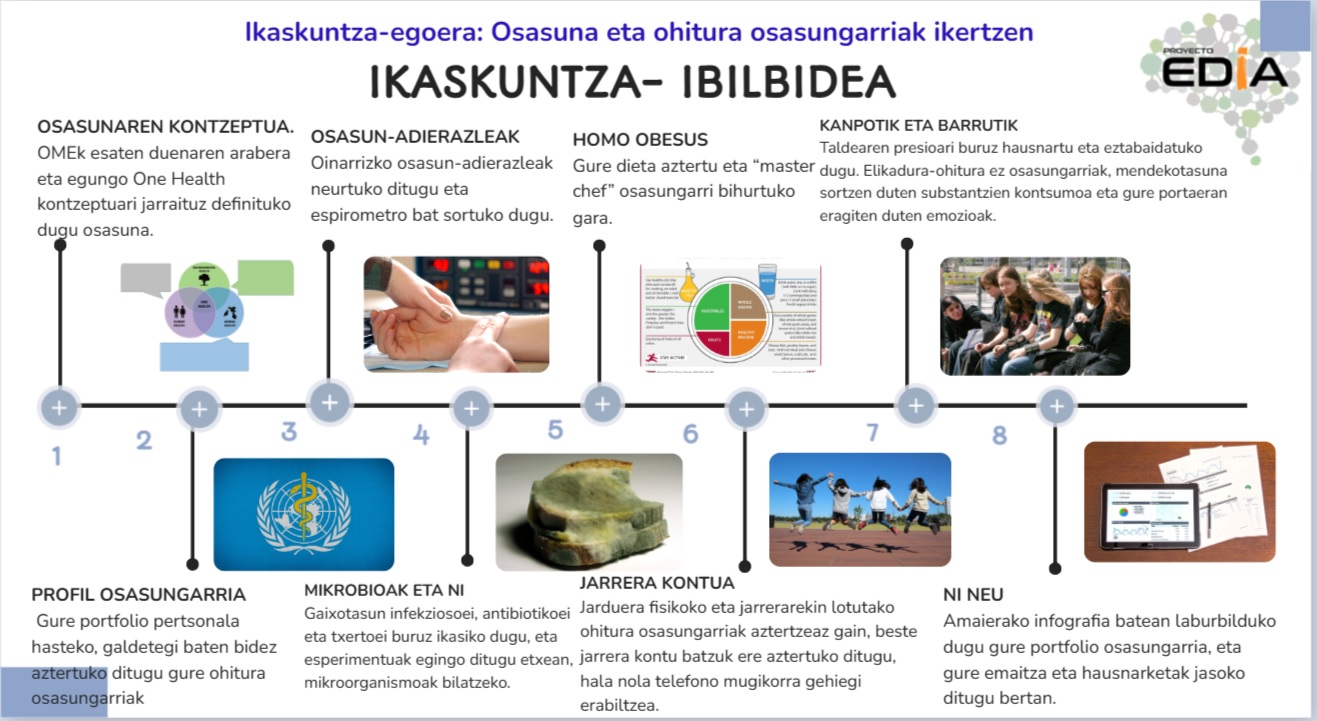
Osasuna eta ohitura osasungarriak
HBI honen helburua da osasuna eta ohitura osasungarriak ikertzea. Osasuna guretzat zer den aztertuko dugu, bai eta kontzeptu horrek historian izan duen bilakaera ere. Ikuspuntu zientifikotik aztertuko ditugu ohitura osasungarriak, gaur egungo praktika jakin batzuetatik haratago (hala nola gorputza gurtzea edo pozik egoteko beharrari buruzko mezu-zaparrada), presio handia egiten baitute osasunaren arloan hartzen ditugun erabakietan.
Sekuentzia didaktikoa ikaskuntza-egoerek osatzen dute, erronka gisa planteatzen baitira, eta gidatutako ikerketen bitartez ebazten dira, amaierako produkzio bati lotuta. Horiek guztiek STEM konpetentzia eta gainerako hezkuntza-konpetentziak garatzen laguntzen dute, baita XXI. mendeko hezkuntzaren erronkak ere.
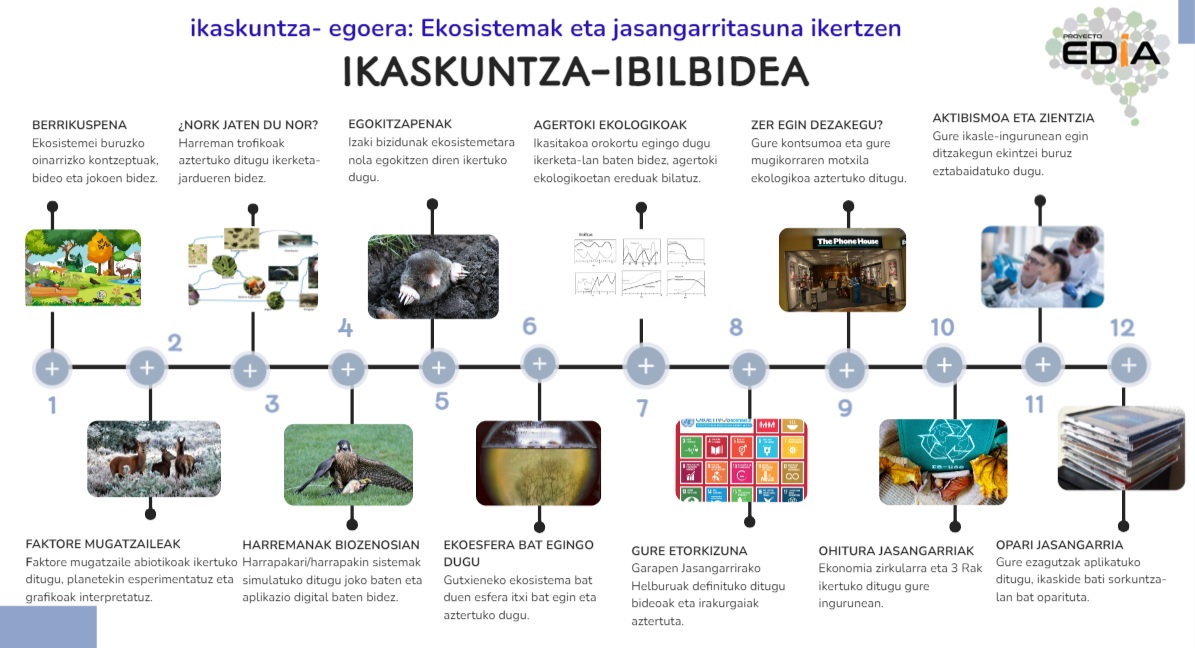
Ekosistemak eta jasangarritasuna ikertzen
HBI honetan, honako gai hauek jorratuko ditugu: ekosistemak, gizakiak haien gainean duen eragina, planeta babesteko egon daitezkeen irtenbideak eta ohitura jasangarriak. Sistema naturalek nola funtzionatzen duten ulertzeak haren orekari eusteko informazioa ematen digu; horrexegatik landuko dugu lehenengo atalean. Bigarren atalean, jasangarritasunaren eta, ondorioz, gure ongizatearen aldeko kontsumo-ohiturak ikertuko ditugu.HBI honetan, honako gai hauek jorratuko ditugu: ekosistemak, gizakiak haien gainean duen eragina, planeta babesteko egon daitezkeen irtenbideak eta ohitura jasangarriak. Sistema naturalek nola funtzionatzen duten ulertzeak haren orekari eusteko informazioa ematen digu; horrexegatik landuko dugu lehenengo atalean. Bigarren atalean, jasangarritasunaren eta, ondorioz, gure ongizatearen aldeko kontsumo-ohiturak ikertuko ditugu.
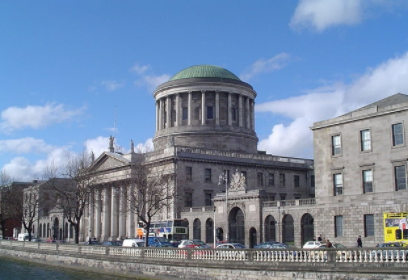
Dublin
Students will travel to Dublin to learn a lot of facts of of this city. Each section is going to take place in a different and famous part of the city of Dublin. In each place, there is a proposal of tasks, challenges and activities. At the end of the project, they will have:
- read official web pages
- watched promotional videos of Dublin.
- posted tweets
- recorded a video clip
- recorded a podcast
- written an informative text.
- made a digital poster.
- made an oral presentation.
- revised comparatives and superlatives.
- learned quantifiers: both, both of/ neither / neither of /either / either of / too / (not) enough / A little / A few / A lot of
- learnt vocabulary about animals, the weather and environmentally friendly attitudes
Cork
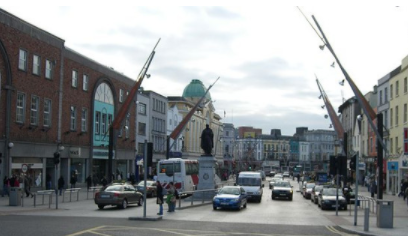
Students will travel to Ireland to learn a lot of facts of Cork and its main landmarks. Each section is going to take place in a different and famous part of the city of Cork. In each place, there is a proposal of tasks, challenges and activities. At the end of the project, they will have:
- read official web pages.
- watched promotional videos of Cork.
- posted tweets.
- recorded a video.
- recorded a podcast.
- made a digital poster.
- learnt the present perfect, affirmative and negative sentences (‘just’, ‘ever’ & ‘never’)
- learnt vocabulary about the weather and the environment.

New York
Students will travel to New York to learn a lot of facts about America and its main cities and design an infographic about their lives. Each section is going to take place in a different part of the city of New York. In each place, there is a proposal of tasks, challenges and activities. At the end of the project, they will have:
- read official websites
- watched videos about the city.
- posted tweets.
- recorded a video.
- recorded a podcast.
- made a digital poster.
- learnt the difference between Present Perfect and Past Simple.
- learnt about the use of “yet” and “already”, “for” and “since”.
- Pronunciation of /e/ vs /ei/
- Vocabulary: personal feelings, opinions and experiences
Home is where the art is
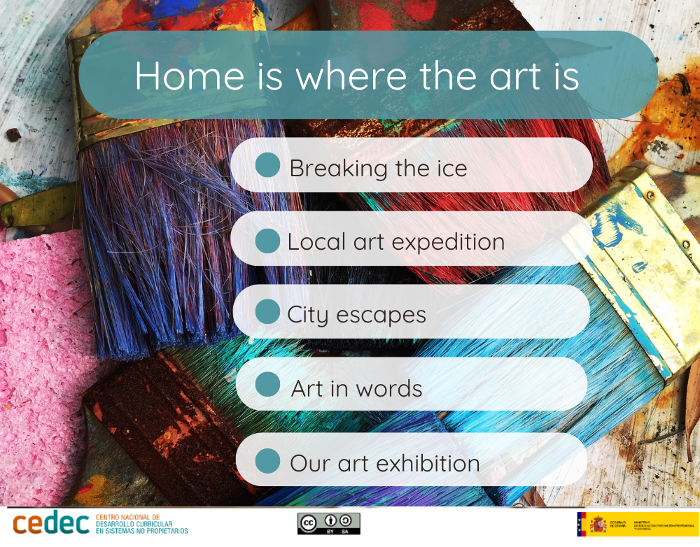
Students are going to think of ways of making a positive impact on the world around them as well as mastering their English skills through engaging activities. Through service learning, students will develop the competences that define their output profile when they finish their compulsory secondary school years.
At the end of the project, they will have:
- reflected on the meaning of art;
- given opinion about types of art;
- read official museum web pages, leaflets and key maps;
- identified art elements and described a piece of art;
- promoted an art exhibition in their town.