Buscador global


Mostrando del 1731 al 1740 de 2732 resultados para: La guerra de Nuestros Abuelos filtrando por: Propuesta didáctica
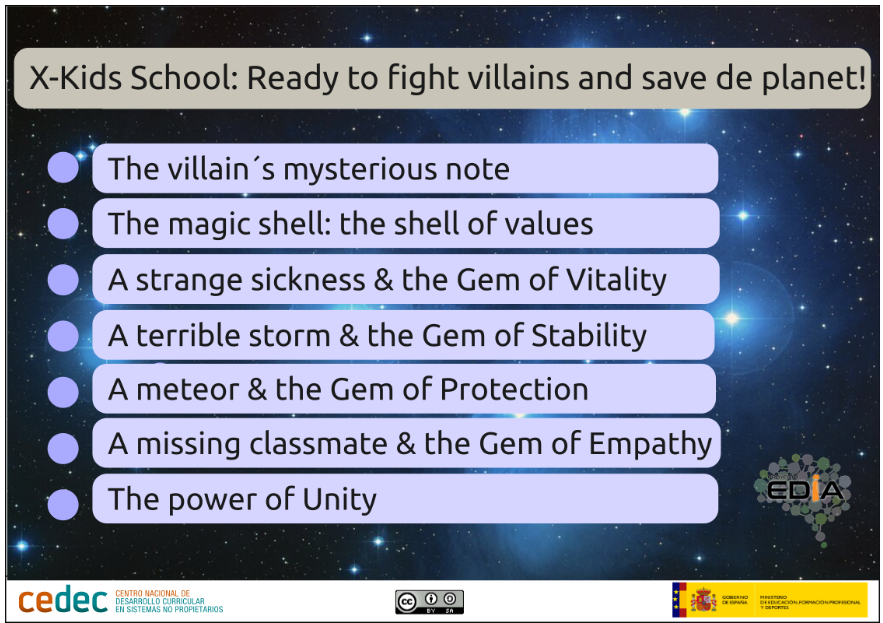
X-Kid School: ready to fight villains and save the planet!
This OER will improve both English skills and ICT ones by using as a context the world of Superheroes. Students will develop the key competences and the specific competences. At the end of this project, they will:
- Develop vocabulary about Braille, sign language, precious stones, health, weather, space, and communication devices
- Perform a sign language song.
- Understand articles and other texts
- Improve their listening by paying close attention to instructions, examples, and a mysterious note.
- Talk about ideas, give advice, describe events, and share information.
- Use an online dictionary to hear and copy the correct sounds., to practice on their own, and work with a partner.
- Use subject pronouns, possessive adjectives, «there is»/ «there are” and present simple.
- Ask «wh-» questions effectively.
- Give instructions using words like «should,» «shouldn’t,» and command verbs.
- Describe things happening now using the present continuous tense.
- Master the past tense for regular and irregular verbs.
- Talk about abilities and possession.
- Write and create health recommendations, Braille messages, a comic strip, and a TV news report.
- Work with others to solve problems, brainstorm ideas, and make arguments.
- Solve fictional missions using superpowers.
- Discuss and compare different ideas and devices
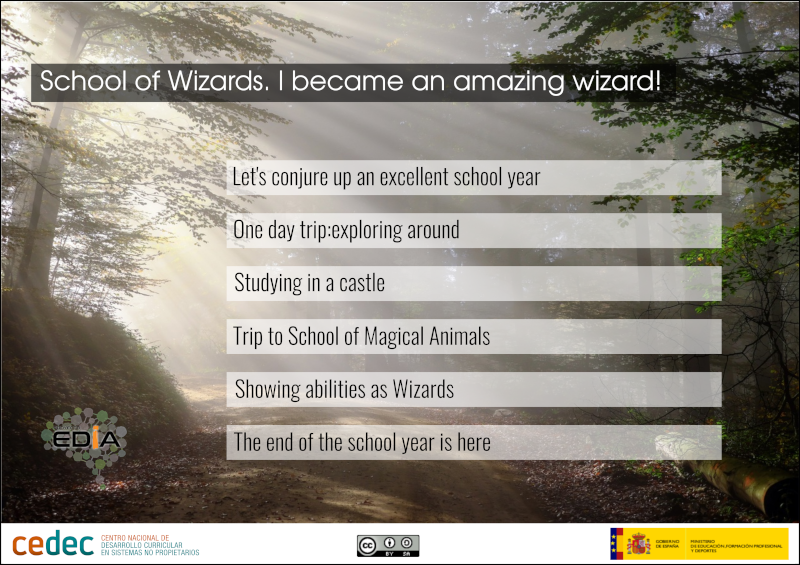
Schools of Wizards. I became an amazing wizard!
This OER will improve both English skills and ICT ones by using as a context the world of wizards. Students will develop the key competences and the specific competences. At the end of this project, they will have learnt to:
- to debate and take decisions
- to understand and produce oral and written messages
- to interact and mediate orally and with written information
- to explain information and remember details
- to develop research skills and visual design skills
- to learn vocabulary related to explorer trips (activities, material, landscape), to animals’ body parts, aromatic plants, ICT and free time activities
- to express actions in the past with regular and irregular verbs
- to express strong obligation and necessity
- to read and follow instructions •to explain instructions to their classmates
- to practice the pronunciation of must and mustn’t
- to know famous castles and their location
- to do descriptions using adjectives in comparative and superlative form
- to know mythical creatures and to practice their pronunciation •to review pronouns (subject, object, adjective possessive and possessive)
- to learn how to take care about animals
- to express certainty, necessity, obligation and lack of obligation
- to express probability or possibility and predictions
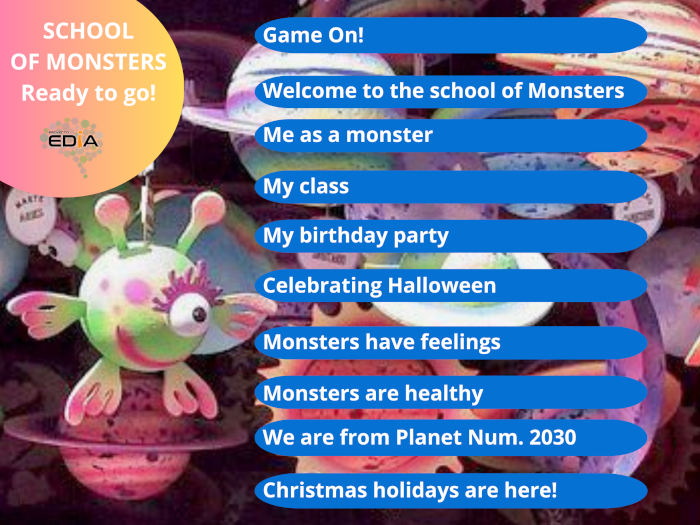
School of Monsters. Me as a Monster!
This OER will improve both English skills and ICT ones by using as a context the world of monsters. Students will develop the key competences and the specific competences. At the end of this project, they will have learnt:
- The alphabet and English phonics.
- verbs of actions, verb ‘to be’ and ‘to have got’.
- to count until 30 and ordinal numbers until 10.
- to introduce themselves.
- to express feelings and emotions.
- to apologise.
- to know the days of the week and the months of the year to invite friends to their birthday parties.
- to describe themselves physically. •to understand and produce oral and written messages.
- to interact and mediate orally and with written information.
- vocabulary related to greetings, material. supplies, fruits, vegetables, family, parts of the body birthday party, Halloween, Christmas, emotions, feelings, food, things, animals, people, planets (the moon and the sun) and sustainability.
- to know the 2030 Agenda and its SDG.
- to use ICT to paint the monster they would like to be, to find images, to watch video
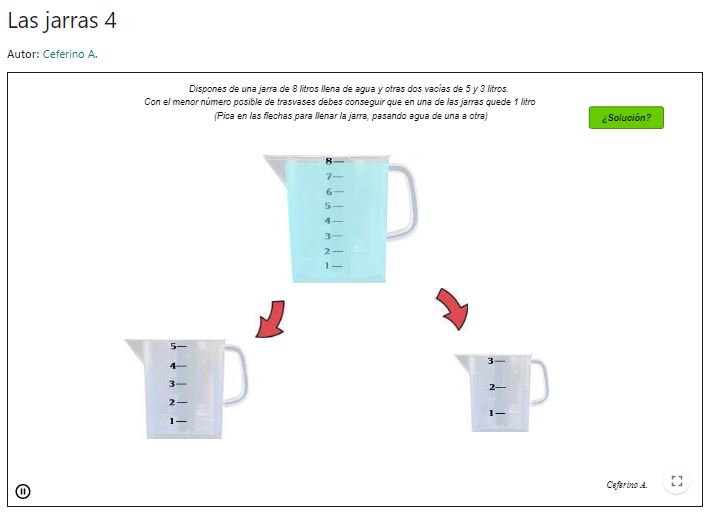
Las jarras 4
El applet presenta tres jarras, donde una simula estar llena de agua (de 8 litros), y se debe realizar un trasvase de agua a las otras dos jarras presentes (de 5 y 3 litros), el menor número de veces posible, para conseguir que en una de las tres jarras quede 1 litro de agua. Para resolver este reto se involucran descomposiciones aditivas del número 8, 5 y 3.
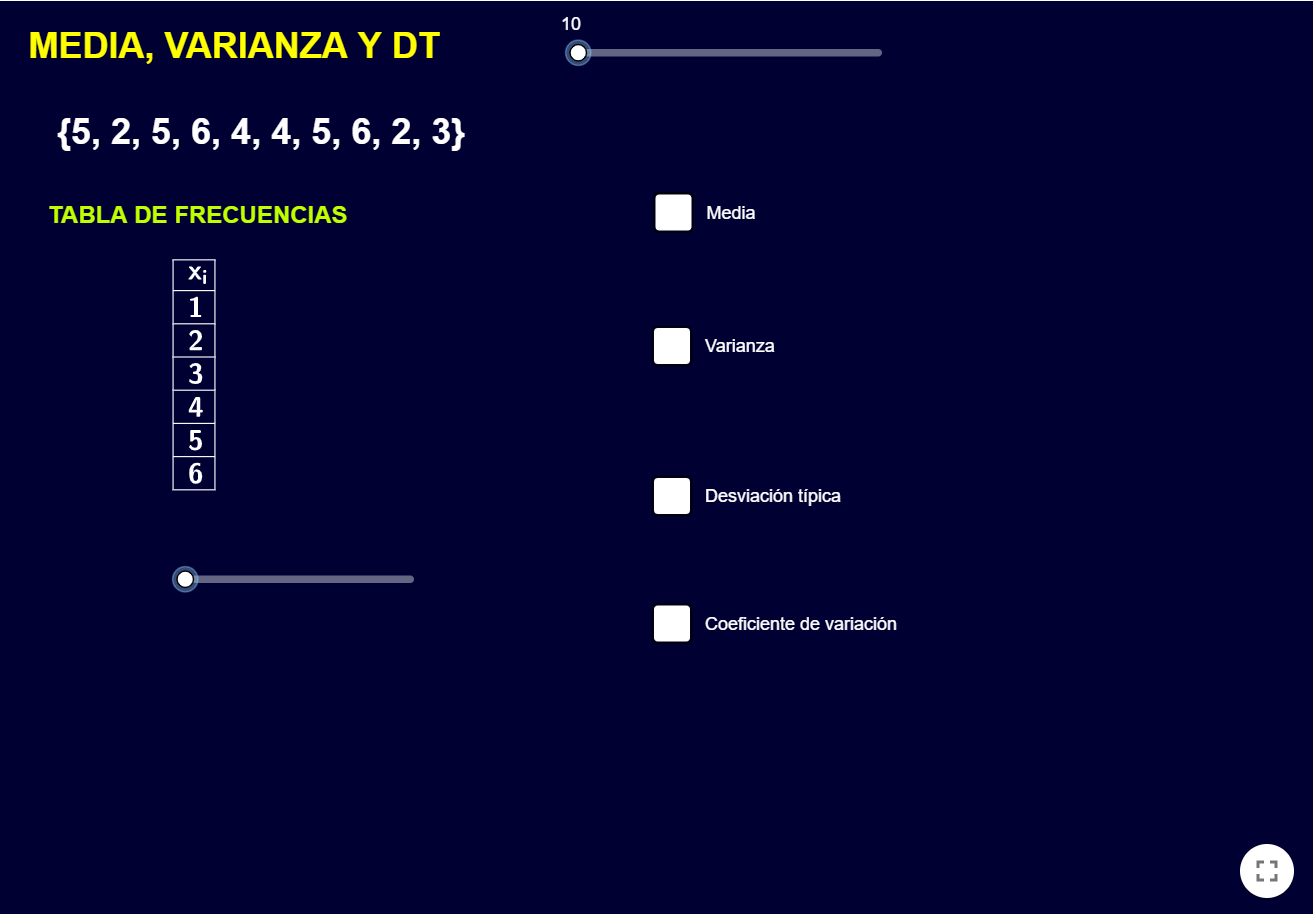
Media, varianza y desviación típica
Este applet permite generar, de forma aleatoria, entre 10 y 20 valores numéricos de una variable discreta. Se pueden visualizar cada uno de los pasos para el cálculo de los parámetros estadísticos así como sus valores.
184. ¡Arre caballito, arre!
Vamos a utilizar como temática narrativa "¡Arre caballito, arre!". ¡Qué cosa más valiosa son nuestros niños y qué relación tan dulce y limpia es el amor que sienten por los animales en general y con esta especie en particular! Es un vínculo que va mucho más allá de sólo acariciarlos y admirar su belleza, ya que los pequeños aprenden a amar y respetar los animales y la naturaleza. Incluso, si se les permite participar en su cuidado, les enseñará a ser responsables de la calidad de vida de su caballo, lo que les dará lecciones de la importancia de ayudar en el bienestar ajeno y cultivar la empatía. Serán enseñanzas de formación, responsabilidad y compromiso que difícilmente tendrán en otra parte. A lo largo de los vídeos descubriremos sus características en ciencias naturales, como ayudan en el trabajo a los hombres desde ciencias sociales, los diferentes deportes que se practican sobre ellos y una curiosa particularidad su capacidad para bailar. Para ello, abordaremos qué animal es el caballo desde el área de Ciencias Naturales; en Ciencias Sociales veremos el caballo en la historia; en el área de Educación Física, ejercicios de movimiento y ritmos relacionados con el caballo y en Inglés, vocabulario relacionado con el caballo.
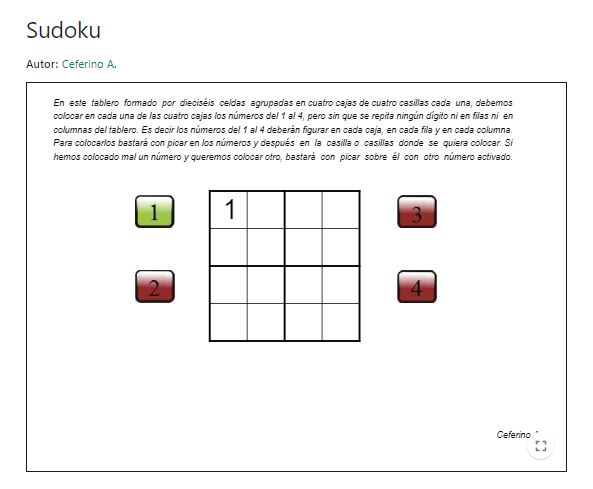
Sudoku
Se presenta una cuadrilla de 4x4 casillas, y cuatro piezas cuadradas donde se recogen los números 1, 2, 3 y 4. Se tiene que realizar un sencillo sudoku, donde tienen que colocar estos cuatro números de tal forma que todas las filas y columnas tengan estos cuatro números, sin repetir ninguno por fil y por columna, y además los cuadrados que se forman en cuadrículas 2x2 también tienen que recoger estos cuatro dígitos sin repetirse. Es un buen instrumento para trabajar estrategias de resolución de problemas como: ensayo y error, buscar un patrón, dividirlo en pequeños subproblemas, etc.
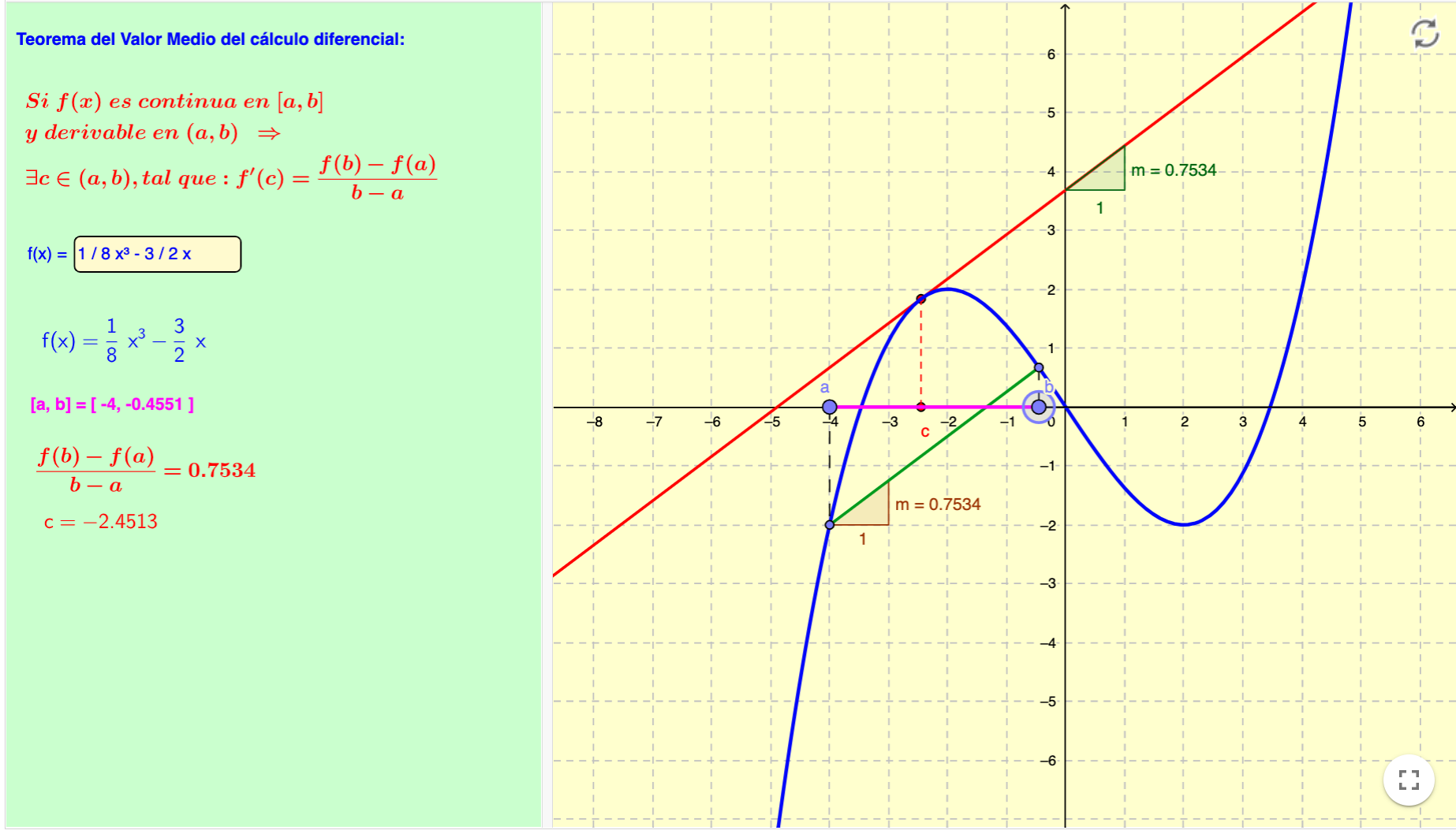
Teorema del valor medio (Lagrange)
Con este recurso se puede visualizar gráficamente el teorema del valor medio (o de Lagrange).